![Selling a House with Water in the Crawl Space in [market_city]](https://image-cdn.carrot.com/eyJidWNrZXQiOiJwcm9kdWN0aW9uLmNhcnJvdC11cGxvYWRzLm9uY2Fycm90LmNvbSIsImtleSI6InVwbG9hZHMvc2l0ZXMvODE5MzIvMjAyNi8wOS9TZWxsaW5nLWEtSG91c2Utd2l0aC1XYXRlci1pbi10aGUtQ3Jhd2wtU3BhY2UucG5nIiwiZWRpdHMiOnsicmVzaXplIjp7IndpZHRoIjoxMTUyfSwidG9Gb3JtYXQiOiJ3ZWJwIiwid2VicCI6eyJxdWFsaXR5Ijo3MH19fQ==)

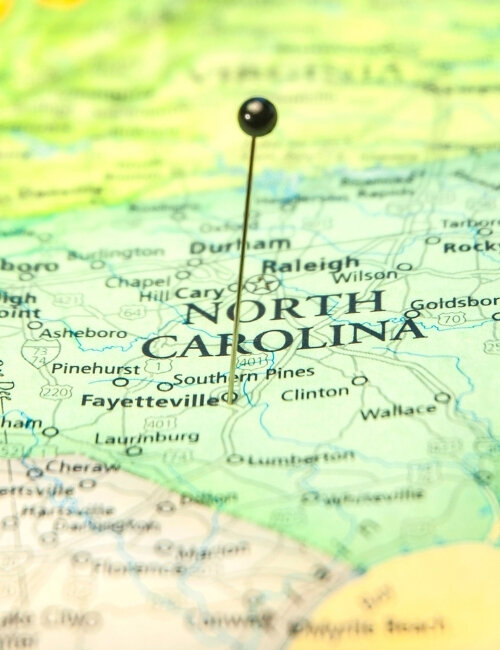
Where Do You Start with a Wet Crawl Space in North Carolina?
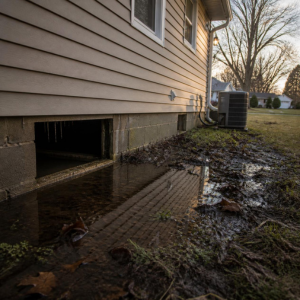
A young couple in Garner called me last year, a few weeks after they moved her father into assisted living. The house he’d lived in since the eighties had water sitting under the back bedrooms. His fishing rods still hung on the garage wall on the Saturday I crawled under there with a flashlight.
They asked what to do first. So we walked the same sequence I use on every wet crawl space house in North Carolina:
- Find where the water gets in, not just that it’s there
- Work out how long it’s been happening, since rot and mold track with time
- Price the repair with real contractor quotes
- Estimate what a buyer will subtract for the problem
- Pick a selling path that fits your timeline and your cash position
- Put all of it in writing on your disclosure form
Plenty of sellers jump straight to step three. They call three waterproofing companies before anyone has diagnosed the source, then panic at a five-figure proposal for what might be a downspout dumping against the foundation. A quote without a diagnosis is a menu. Diagnose first. The cheapest repairs and the priciest ones look identical from inside the house.
What Causes Water in a Crawl Space in North Carolina?
You cleaned the gutters back in March, so the roof isn’t the culprit. Maybe. Gutters are the first suspect, not the only one, and they account for less than half of the wet crawl spaces I see.
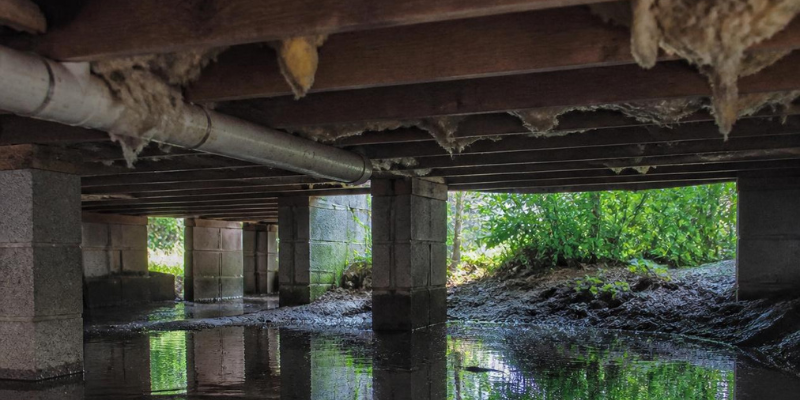
Piedmont clay holds water like a bathtub liner. Around Charlotte, Greensboro, and much of Wake County, that dense red soil refuses to drain, so rainwater pools against the foundation and seeps through block walls. On the Coastal Plain, groundwater runs the show. The water table sits near the surface, and a tropical system rolling through Brunswick or New Hanover County pushes it up through the crawl space floor. Mountain properties near Asheville get a third version, with hillside runoff aimed at a badly graded foundation.
Humidity is its own category. Does your crawl space smell worse in July than in January? That’s condensation, not a leak. Warm outside air drifts through the foundation vents, hits cold ductwork and cool pipes, and turns to liquid on every surface.
Plumbing chips in too: a weeping supply line, a cracked drain, and an HVAC condensate line that discharges two feet from the access door. I’ve found more crawl space water caused by a clogged air conditioner drain pan than by any storm. That repair cost one homeowner less than a tank of gas, and the moisture damage above it cost thousands.
Whatever’s driving the water, you can skip the repairs and sell as-is. Here’s how North Shore Cash Offers can help.
How Serious Is Water in a Crawl Space?
Everything depends on how long it’s been sitting. Wood that stays damp starts to decay, and fungal growth takes hold on joists and subfloor before anyone upstairs notices a soft spot. Once the girders and band boards go, you’ve crossed into structural repair. Once that growth is visible, you’re facing a disclosure question too, and I cover that ground in selling a house with mold in North Carolina.
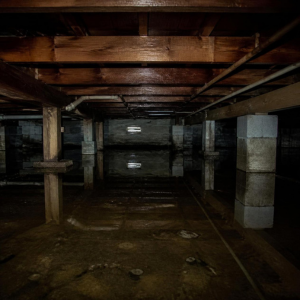
Your house pulls air upward, floor by floor. The stack effect draws air from the lowest point in the structure, through the living space, and out of the attic. Whatever grows in the crawl space, your family breathes a share of it. Musty closet odors trace back downward.
Heating and cooling suffer too. Damp air is harder to condition than dry air, ductwork sweats, and insulation between the joists sags off and rots. The EPA’s Energy Star program puts average savings at 15 percent on heating and cooling costs from air sealing plus insulation in attics, floors over crawl spaces, and basement rim joists. A wet crawl space works against every bit of it.
Termites deserve a mention. NC State Extension says moist wood is one of the biggest draws for termites, and eastern subterranean termites turn up across the state.
Sellers get the insurance question wrong, too. Most homeowner’s policies cover sudden accidents and exclude gradual seepage as wear and neglect, so a claim on a slowly wet crawl space goes nowhere. A burst pipe is different.
How Do You Assess Water Problems in Your Crawl Space?
For years, I lumped standing crawl space water and high humidity into one bucket. They’re separate problems with separate repairs, and treating them alike wastes money.
Go under the house within a day of a hard rain, then again after a dry stretch. I picked that habit up after guessing wrong once. Water that shows up only after storms and drains away points to grading and gutters. Water that never leaves points at the water table or a plumbing leak. Bone dry but smells like a wet towel? That’s humidity, full stop.
Bring two tools. A pin-style moisture meter reads what the wood is holding, and a cheap hygrometer reads what the air is holding. Aim for relative humidity in the 45 to 55 percent range and treat 60 percent as the line you don’t want to cross. Wood moisture content above 19 percent is enough to support mold and decay fungi, so that’s the number your meter is arguing with.
Look for evidence, not just water. Darkened dirt in one corner, white mineral crust on block walls, rust streaks on duct straps, insulation hanging down like wet laundry. Each tells you something about the last several seasons.
Hire a licensed home inspector or a mold inspection specialist if you’re unsure. A mold inspection costs a few hundred dollars and gives you paper, and paper is what buyers negotiate against later. Sellers who walk in blind renegotiate during due diligence.
You can also sell the house to someone who isn’t going to renegotiate over what the inspection turns up. Contact North Shore Cash Offers.
How Much Does Crawl Space Water Devalue a Home in North Carolina?
Appraisers rarely deduct the exact cost of the repair. Buyers do something worse. They subtract the repair estimate, then subtract again for everything they’re afraid that estimate missed. A couple of thousand dollars of work turns into a five-figure concession in their heads.
Market backdrop matters here. Redfin puts the North Carolina median sale price at $373,465 in August 2026, down 0.41 percent from a year earlier, with a median of 66 days on market. Nine days slower than the prior August. Buyers have room to be picky, and a wet crawl space hands them a reason.
Price cuts tell the same story. Roughly 21.6 percent of North Carolina listings took a price drop in August 2026, up from 20 percent the year before.
The discount isn’t uniform. On a house under the state median, a visible moisture problem might cost you a few percent of value. On a higher-end property that has to show turnkey, the same finding can cost double that, because that buyer has fifteen other options.
Financing pressure drives the number, too. When underwriters get nervous, the buyer pool narrows to people paying cash, and cash buyers price risk aggressively. That’s arithmetic on an uncertain repair, not gouging.
How Much Does It Cost to Fix Crawl Space Water in North Carolina?
Get three line-item quotes before you believe any number, including mine. A single total on a one-page proposal hides what matters.
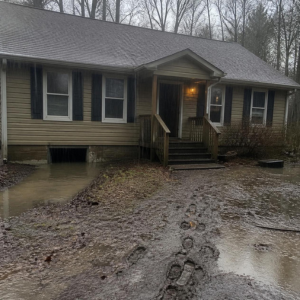
Full crawl space encapsulation averages around $5,500 nationally in 2026, with most projects landing between $3,000 and $15,000 depending on square footage and condition. Per square foot, the work runs roughly $3 to $10. The top of that range is where severe moisture, active mold, and structural repair live.
Add-ons stack, and they stack fast. Mold remediation with containment and antimicrobial treatment typically runs $1,500 to $4,000 in a crawl space. Rotted joists or a bad sill plate can cost anywhere from $1,500 to $16,000, depending on how far the decay traveled.
Crawl space drainage is its own line item. A basic interior system runs about $1,500 to $4,000, while a full perimeter system with the trenching it demands costs closer to $5,000 to $9,000. Sump pump installation averages around $1,100 and ranges from $800 to $3,000. A battery backup adds $1,000 to $2,000 more, and in coastal counties where storms knock out power, I’d call that money well spent.
Don’t let anyone seal an active mold problem behind a new vapor barrier. Trapping growth inside a freshly sealed, still-humid space keeps it alive, and you’ll pay twice. Remediation, then drainage, then the barrier. A contractor who proposes another order is telling you something.
Can You Sell a House with Water in the Crawl Space?
The question everyone circles without asking is whether this house is legally sellable right now. It is. North Carolina doesn’t require you to fix anything before closing, and no state law blocks the transfer of a house with a wet crawl space floor.
What state law requires is disclosure. The Residential Property Disclosure Act covers transfers of residential property with not less than one nor more than four dwelling units. Under G.S. 47E-4, you owe the buyer two forms before the offer: the Residential Property and Owners’ Association Disclosure Statement and the Mineral and Oil and Gas Rights Mandatory Disclosure Statement. On each question, you can answer yes, no, or “no representation.”
That third option isn’t a loophole. The statute lets you decline to characterize the property. It doesn’t license concealment, and the North Carolina Real Estate Commission points out that a listing agent still has to disclose material facts. The water you’ve been pumping out for three winters is a material fact. Talk to a real estate attorney before you get creative with that form.
Financing is the real gatekeeper. A conventional buyer’s lender may proceed with conditions. An FHA buyer’s appraiser works from a checklist. Companies like North Shore Cash Offers buy in this exact condition because we price the repair ourselves instead of asking a lender’s permission, which takes the appraisal out of the picture.
No lender, no repair escrow, no appraiser walking the crawl space with a checklist. That’s what investor home buyers in North Carolina offer.
How Do You Minimize Water Issues Before Selling Your Home?
Full encapsulation right before you list is usually a poor use of your money.
You’ll rarely recover the whole cost at closing, and buyers discount the work anyway because they didn’t pick the contractor. Run every downspout at least six feet out from the foundation. Build the soil up so it slopes away from the house. Clear the old debris, torn poly, and fallen insulation so the crawl space reads as maintained. That same restraint pays off on the rest of the house, which I break down in selling a house that needs repairs in North Carolina.
Fix the small mechanical stuff: a leaking HVAC condensate line, a dripping hose bib, a toilet supply weeping into the floor cavity. Those repairs cost little and remove the visible source, which changes what an inspector writes.
Run a dehumidifier down there for a few weeks before photos. Dry wood photographs differently from wet wood, and a crawl space that looks dry stops the buyer’s imagination from running wild.
Then build the folder. Dated photos, the plumber’s invoice, the grading receipt, and moisture readings before and after. I’ve watched that folder save sales where the inspection report read rough.
One exception to my encapsulation stance. If the house has a genuine high water table and standing water year-round, half measures won’t hold. Sell as-is or do the full system.
What Is a Smarter Selling Strategy for Homes with Crawl Space Water?
Price it like a dry house, and you’ll spend three months chasing the market downward. Carrying costs and price cuts add up to more than the repair would have. I watch it play out every season.
Location changes the math. Raleigh homes sold in a median of 39 days over the three months ending August 2026, at a median price of $422,000. Brunswick County single-family homes averaged 91 days that same August, up from 73 days a year earlier. A wet crawl space adds weeks to both numbers, and in the slower coastal market, it can add months.
Three paths exist, and each fits a different seller. Fix everything and list at full market value if you’ve got the cash and the patience for a contractor’s schedule. List as-is with full disclosure and a repair credit in the price if you want MLS exposure. Sell direct to a cash buyer if speed and certainty matter more than the last few percent. If the house is in Burlington, that third path starts with cash home buyers in Burlington, NC.
Statewide inventory sat at 5.81 months of supply in the August 2026 NC REALTORS report. That’s balanced, not a seller’s market. Balanced markets punish condition problems, because buyers with options don’t compromise.
North Shore Cash Offers works that third path, and I’ll tell sellers plainly when one of the other two serves them better.
Where Can You Find More Answers About Selling a House with Crawl Space Water?
Sellers call their agent first and figure that covers it. Agents know contracts and pricing. Very few know what an underwriter does with a moisture notation, and that gap kills sales two weeks before closing.
Go to the source on financing. FHA appraisal rules tell the appraiser to report excess moisture, pooling water, dampness, damage, or vermin. The crawl space has to be free of debris, with at least 18 inches of clearance beneath the floor joists. HUD’s older reference guidance is blunter: a sump pump isn’t a cure-all, and where there’s significant incurable ponding, the underwriter may reject the property.
For disclosure questions, the North Carolina Real Estate Commission publishes guidance written for consumers, not just brokers. Your county inspections department can say whether encapsulation work needs a permit locally, which matters if an unpermitted system turns up during due diligence.
NC State Extension’s Healthy Homes program collects crawl space and moisture material for homeowners, including Advanced Energy’s guide to closed crawl space design. Nobody there is selling a product.
What Should You Cut From Your Pre-sale Repair List?
Before: a seller with a $14,000 encapsulation proposal, a $3,200 mold quote, and a new HVAC estimate, convinced the house was unsellable until all three were done. After: gutter extensions, a regraded flowerbed, a dehumidifier, and a contract at a price he was fine with.
Cut anything that doesn’t change what the inspector writes. New crawl space insulation on wet joists is money set on fire. Patching the subfloor over a water source nobody fixed gets discovered, and it reads as concealment, worse than the original defect.
Merge overlapping quotes instead of stacking them. Drainage and encapsulation from one crew costs less than two companies, and you get one warranty holder instead of two pointing at each other.
Keep the source repair. Always. A downspout, a grading correction, a failed sump pump. Those hold up during due diligence, because the buyer’s inspector can verify them.
You can drop the mold test if you’re selling as-is to a cash buyer. We assume remediation and price accordingly. Keep it for an MLS listing, where a clean report is a bargaining chip.
The general rule I’ve landed on after hundreds of houses: spend on the cause, document everything, and let the buyer own the cure.
Some sellers work the list down. Others hand the whole thing to a company that buys homes in Roxboro and nearby North Carolina cities and move on.
Is Selling Your House with Water in the Crawl Space Possible in North Carolina?
Apex makes the point. The median sales price there hit $609,995 in August 2026, with homes moving in a median of 19 days. Wet crawl space houses don’t move that way. They sit, they take three price cuts, and they sell to an investor anyway, below what a direct offer would have brought in week one.
So yes, you can sell it. A wet crawl space house always sells eventually. The real question is which buyer pool you’re selling into, and how much discount you absorb in holding costs while you wait.
Whichever path you take, take it on purpose. The mistake is defaulting to one because a contractor scared you into it.
Frequently Asked Questions
Do I have to disclose water in the crawl space if I’m selling as-is?
Yes. As-is settles who pays for repairs, not whether you tell the truth. The Residential Property and Owners’ Association Disclosure Statement lets you answer “No Representation.” That answer invites a lawsuit if you’ve seen standing water and check it anyway. Disclose and move on.
Will a wet crawl space kill an FHA or VA loan?
It can. Pooling water and visible structural damage are common reasons an appraiser calls for repairs before closing. Slight dampness sometimes passes. Active water rarely does, which is why these houses often end up with cash buyers even after an MLS listing.
How much does encapsulation actually cost in the Triangle?
Triangle crawl space quotes track the national numbers. Budget from that $3 to $10 per square foot range, and expect the upper half once drainage, a sump pump, and debris removal are in scope. Get three quotes. The spread will surprise you.
Should I fix it before listing or take the price hit?
Fix the source of the water, always. That’s usually a few hundred dollars in gutters, downspout extensions, and grading. Full encapsulation depends on your timeline and your cash. If you can’t float five figures and wait months for the market to pay you back, taking the discount is rational.
Does mold in the crawl space have to be remediated before I sell?
Not legally, in most cases. Practically, it depends on your buyer. A cash buyer assumes it, while a retail buyer with a lender and a nervous inspector may require it. Selling as-is to someone who’s priced it in avoids the question.
How fast can I sell if the crawl space is flooded right now?
We typically close in two to four weeks on houses like this, limited mostly by the title search. No appraisal, no repair escrow, no lender walking away after the inspection photos come back.
Got water under your house, and you’re weighing whether to spend the money or just be done with it? I’ll look at the situation and tell you what I’d offer, and what I think you’d net if you fixed it and listed instead. No cost to find out. Sometimes the right answer is to call a drainage contractor and never hear from me again. Reach out whenever you’re ready.
Helpful North Carolina Blogs